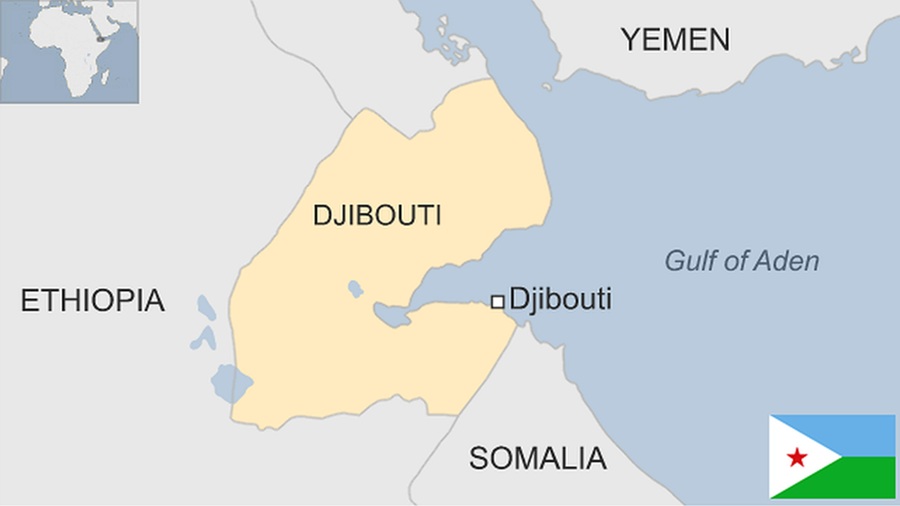
At the point where the Red Sea meets the Gulf of Aden, there is a small gate guarding one of the busiest trade routes in the world. That country is Djibouti. Even though its territory is only about two-thirds of West Java Province, its geopolitical position makes it a “jewel” that is being fought over by world powers. However, behind the shadow of foreign military bases and giant tankers, Djibouti is a Muslim country that contains a depth of spirituality, cultural resilience and natural landscapes that seem to come from another planet.
For those of us who are familiar with Islamic discourse in Indonesia, visiting Djibouti is a way to understand how Islam has become a glue for identity amidst the harsh nature of East Africa and competition for global influence. Islam is not a new religion in Djibouti. History records that this teaching entered the Horn of Africa not long after the prophethood of Muhammad SAW, brought by the companions who made the first emigration to Abyssinia (now Ethiopia). Since then, Islam has become an inseparable part of the main ethnic identity there, namely the Somali (Issa) and Afar tribes.
Also Read: Tracing the Traces of Harmony and Uniqueness of Albanian Muslims
Around 94% to 96% of Djibouti’s population are Sunni Muslims, the majority of whom follow the Shafi’i School of thought—the same as the majority of Muslims in Indonesia. The similarity of these schools of thought creates a special sense of emotional closeness. In Djibouti, family law and daily religious practices are strongly characterized by moderate traditional nuances. Mosques in the capital Djibouti City are not only places for prayer, but also centers of social activity where people gather for deliberation.
One of the strengths of Islam in Djibouti is its role as a unifier. Even though it consists of two large ethnicities that have historically had rivalries, namely the Issa and Afar, Islam provides a common moral language. Inside the mosque, there are no ethnic barriers; they stand on the same line. Local culture in Djibouti also highly respects oral traditions. Local clerics often convey their preaching through beautiful poetry, combining the teachings of monotheism with local wisdom about maintaining family honor and hospitality to guests. In a country where temperatures can reach 40 degrees Celsius, water is not only a physical necessity, but also a symbol of blessing. Giving drink to travelers is one of the forms of almsgiving most highly respected by the Muslim community of Djibouti.

Also Read: Persian Descendants in Medina, Biographies of Three Great Figures Grandson of Yazdajird
The Islamic education system in Djibouti still maintains strong traditional traditions alongside formal schools. Djiboutian children usually start their day by going to a madrassa or Koranic school before going to public school. There, they memorized holy verses methodically interpretationwhich emphasizes the power of memory and fluency in pronunciation. The similarity with the Islamic boarding school system in Indonesia can be seen from how people really respect the figure of the Sheikh or religious teacher. Social decisions often involve consideration by religious leaders, ensuring that the economic modernization being promoted by the government does not uproot religious values that have been rooted for centuries.
This is the unique side that differentiates Djibouti from other Muslim countries in Africa. Due to its strategic location on the Bab-el-Mandeb Strait, Djibouti hosts military bases from various major countries, including the United States, France, China, Japan and Italy. For local Muslims, the presence of thousands of foreign troops creates a unique social dynamic. On the one hand, their presence encourages economic and infrastructure growth. On the other hand, the people of Djibouti have to fight extra hard to maintain Islamic values and local culture so that they are not eroded by the influence of the Western lifestyle brought by military expatriates. The contrast between the towering mosque minaret and the aircraft carrier docked in the harbor is an everyday sight that encapsulates Djibouti’s position as a meeting point for civilization.
Also read: Get to know the book of Tafsir Kasyf Wa Al-Bayān by Al-Tha’labī
Geographically, Djibouti has another side that is both amazing and challenging. The country is home to Lake Assal, the lowest point in Africa (155 meters below sea level) and one of the hottest places on earth. This lake is surrounded by vast white salt land and inactive volcanoes. For the surrounding Muslim population, this exotic landscape is a reminder of the greatness of Allah SWT.
The traditional salt miners, most of whom are local residents, work under the intense heat of the sun while continuously chanting zikr. Their lives are a symbol of steadfastness (patience) and hard work, two important pillars of the Islamic work ethic. Watching them work in the middle of salt fields glistening in the sun is a real lesson in how faith gives strength to survive even the most inhospitable environments.
Another aspect that is worth noting is the role of Muslim women in Djibouti. Despite living in a patriarchal society, Djibouti women are known to be very active in the informal trade sector. In the markets, they are not only traders, but also keepers of traditions. They wear brightly colored traditional clothing called On the shelf with a distinctive head covering. Women in Djibouti are also the main movers in religious ceremonies at the family level, such as commemorating the Prophet’s birthday or praying together. They ensure that Islamic values are passed on to the next generation through stories of Islamic heroes and moral teaching at home.
Also read: The desert city that gave birth to the keepers of the divine word
Of course, Djibouti is not free from problems. Despite being a world logistics center, unemployment and poverty levels among local residents are still quite high. This poses a challenge for religious leaders and governments to ensure that the wealth coming from international ports also trickles down to the people in need. The principle of social justice in Islam is a central issue that is often raised in Friday sermons there, encouraging the government to pay more attention to the welfare of the people.
Getting to know Djibouti is learning about how a small Muslim nation is able to stand tall amidst the vortex of global interests. They teach us that the size of a territory does not determine influence, and that a strong faith is able to adapt to changing times without losing its identity.
Djibouti is a reminder that ukhuwah Islamiyah transcends economic and political boundaries. There, among the dust of the desert and the blue of the Red Sea, our brothers remain steadfast in their prostration, keeping the light of Islam burning in one of the most strategic corners on the face of the earth. Hopefully their enthusiasm for maintaining harmony and identity can be an inspiration for us in Indonesia to continue to maintain a friendly and empowering Islam.
Writer: Anik Wulansari
Editor: Rara Zarary
News
Berita Teknologi
Berita Olahraga
Sports news
sports
Motivation
football prediction
technology
Berita Technologi
Berita Terkini
Tempat Wisata
News Flash
Football
Gaming
Game News
Gamers
Jasa Artikel
Jasa Backlink
Agen234
Agen234
Agen234
Resep
Download Film
Gaming center adalah sebuah tempat atau fasilitas yang menyediakan berbagai perangkat dan layanan untuk bermain video game, baik di PC, konsol, maupun mesin arcade. Gaming center ini bisa dikunjungi oleh siapa saja yang ingin bermain game secara individu atau bersama teman-teman. Beberapa gaming center juga sering digunakan sebagai lokasi turnamen game atau esports.


